
AI Anxiety Is Real. And It’s About More Than Technology.
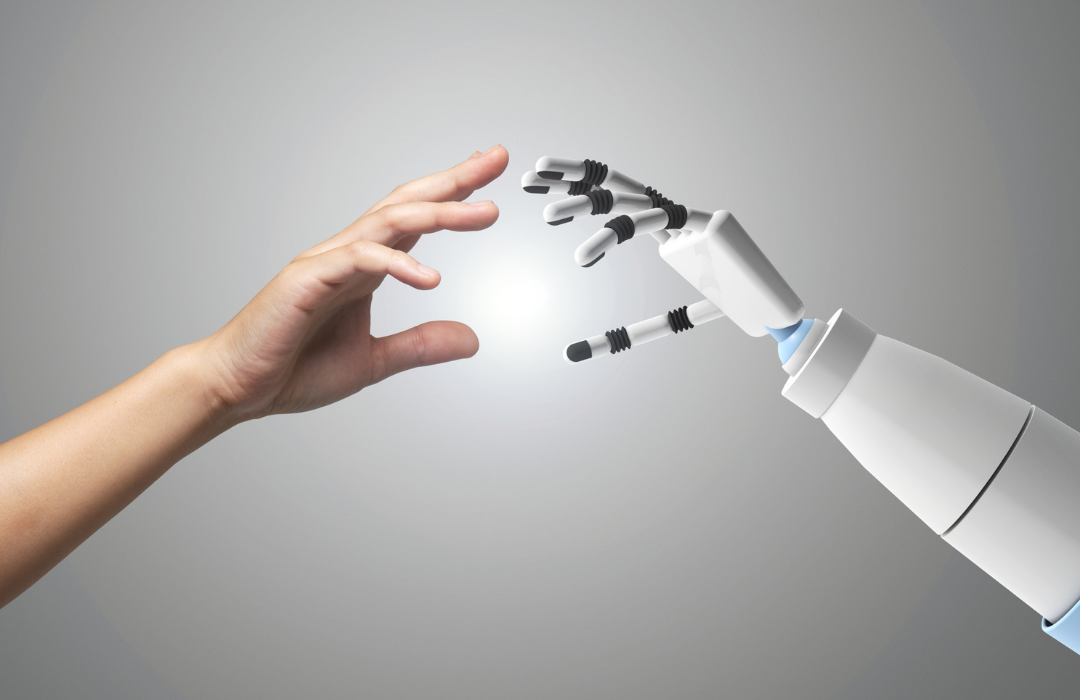
Jobs. Climate. Creativity. Privacy. The future of work. AI is changing quickly, and our nervous systems are trying to keep up.
It’s hard to open your phone without encountering another prediction about artificial intelligence.
Your job could disappear. Your industry could change completely. AI is consuming too much energy. Everything you see online might be fake. The skills you spent years developing may suddenly be automated. The world five years from now could look nothing like the one you planned for.
Some predictions are grounded in legitimate concerns. Others are exaggerated. Most of us don’t have enough information to know the difference.
And that uncertainty can be exhausting.
For many people, anxiety about AI isn’t really about the technology itself. It’s about what the technology represents: change we can’t fully predict or control.
The future suddenly feels very close
Technological change has always created uncertainty. What feels different about this moment is the speed.
AI is no longer an abstract idea about the distant future. It’s showing up in workplaces, classrooms, creative industries, search engines, healthcare, relationships, and everyday conversations.
That can create a strange psychological tension.
We’re being asked to adapt to something while we’re still trying to understand what it is.
One day, AI is presented as a tool that will make our lives easier. The next, there’s a headline predicting mass job displacement. Then another about environmental costs, misinformation, surveillance, or entire industries being transformed.
The nervous system doesn’t necessarily distinguish between a threat happening right now and a future threat we repeatedly imagine.
When the future begins to feel unstable, the body can respond accordingly.
“Is AI going to take my job?”
For many people, this is the question underneath the conversation.
Work isn’t only how we make money. It can also provide stability, routine, identity, community, purpose, and a sense of competence.
So when people hear that AI may automate parts of their profession, the fear can reach much deeper than employment.
Will my skills still matter?
Will I be able to support myself?
Did I choose the wrong career?
How am I supposed to plan for a future that keeps changing?
Those aren’t irrational questions.
But there is a difference between preparing for change and mentally living through every possible version of the future before it happens.
Anxiety often tries to turn uncertainty into certainty by thinking harder.
Sometimes, there simply isn’t an answer yet.
Then there’s climate anxiety
For people already carrying anxiety about climate change, AI can feel like another complicated layer.
Conversations about data centers, electricity demand, water use, and the environmental footprint of rapidly expanding technology can create a sense that even participating in modern life comes with consequences.
This can become especially overwhelming when individual responsibility and enormous systemic problems start to blur together.
Should I be using this?
Am I contributing to the problem?
Does anything I personally do actually make a difference?
Climate anxiety can easily become a cycle of guilt, helplessness, and hypervigilance.
Caring about the impact of technology is reasonable.
Feeling personally responsible for solving a global infrastructure problem is something else entirely.
We weren’t designed to process the entire future every morning
Part of the problem may not be AI alone.
It’s the amount of information surrounding it.
Every breakthrough. Every warning. Every prediction. Every CEO interview. Every viral demonstration. Every person announcing that an industry is either about to disappear or be completely revolutionized.
All before breakfast.
Our brains now have access to an extraordinary amount of information about threats that are global, complicated, and largely outside our immediate control.
Knowing more does not always make us feel safer.
Sometimes it simply gives anxiety more material.
There is a point where staying informed becomes repeatedly exposing yourself to uncertainty.
You can care without being consumed
Managing AI anxiety doesn’t require pretending nothing is changing.
It means learning to recognize the difference between what deserves your attention and what is asking for your fear.
You can learn new skills without assuming your career is doomed.
You can care about the environmental impact of technology without carrying the climate crisis entirely on your shoulders.
You can stay informed without reading every prediction.
You can acknowledge that the future of work may change while remembering that humans have navigated enormous technological shifts before.
And you can admit something that our culture is often uncomfortable admitting:
We don’t know what happens next.
Uncertainty is not the same thing as danger.
Come back to what is happening now
When future anxiety becomes overwhelming, the instinct is often to gather more information.
Sometimes the more helpful response is the opposite.
Close the tabs.
Notice what is actually happening in your life today.
What problems are real right now?
What decisions actually need to be made this week?
What parts of your career can you strengthen?
What relationships, routines, and communities make you feel grounded?
What is within your control?
The future will ask us to adapt when it arrives.
We don’t have to emotionally experience every possible version of it in advance.
Making room for uncertainty
AI may change the way we work, create, communicate, and live. Some of those changes may be exciting. Others may be difficult. Many are still impossible to predict.
Mental health isn’t about convincing ourselves that everything will be fine.
It’s about developing the capacity to live meaningfully even when we don’t know exactly what comes next.
If anxiety about work, climate change, technology, or the future is beginning to affect your daily life, therapy can offer a space to slow down, separate immediate concerns from imagined ones, and build a more grounded relationship with uncertainty.
Connect with a therapist at Repose and find support for navigating anxiety in a world that doesn’t always come with clear answers.
